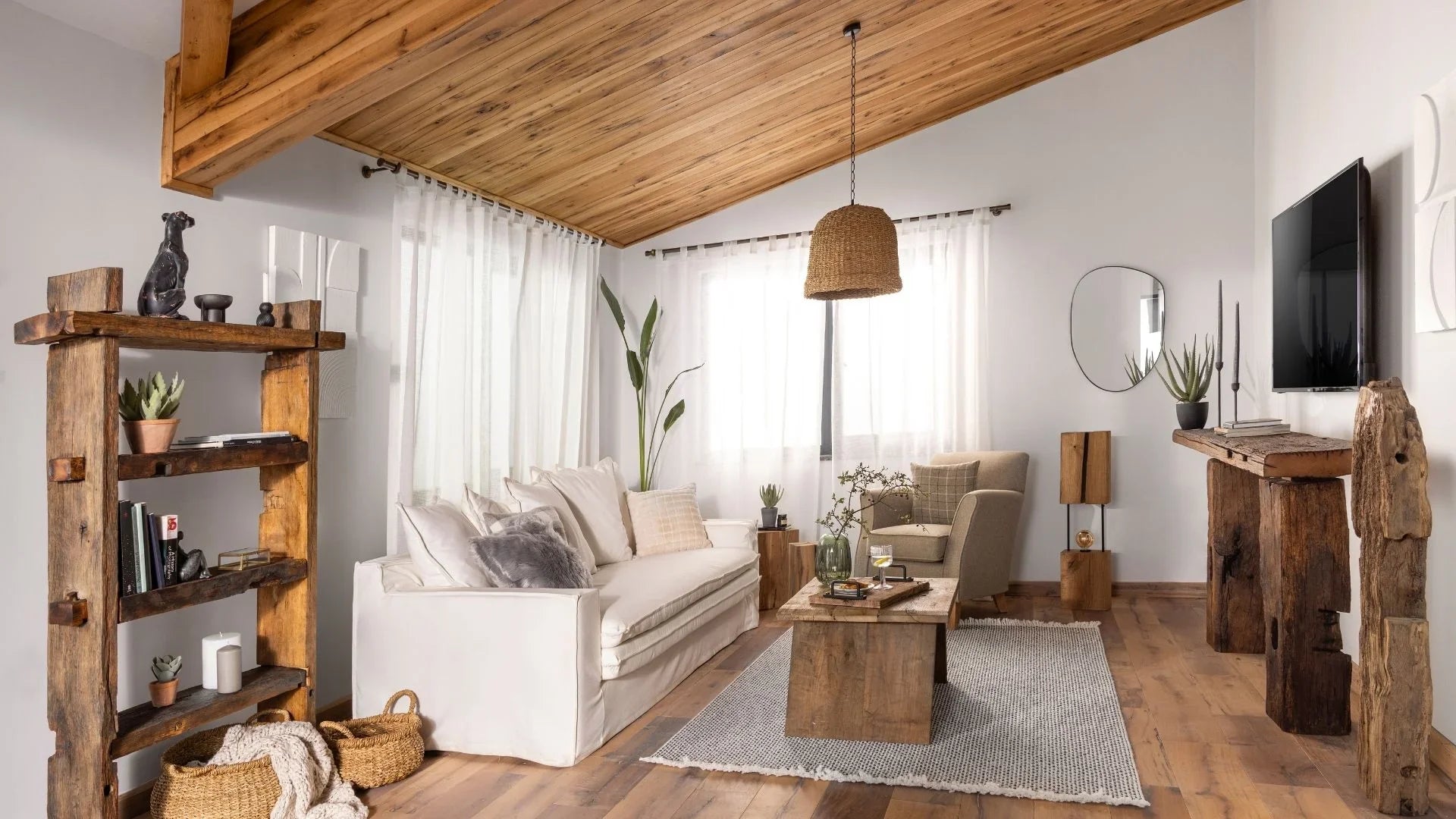
Reclaimed oak flooring is one of the most durable, characterful choices you can make for a home interior. Each board carries a weathered surface built over a century or more, and no new-cut timber can replicate that honestly. At Woody Workz, we work in reclaimed oak and chestnut only, both genuine hardwoods, so you know exactly what you are getting from the start.
Why Reclaimed Oak Flooring Outperforms New Timber
Oak is a dense, slow-growing hardwood. By the time a beam or floorboard has spent a century in a historic structure, its cell structure has stabilised far beyond what a freshly milled plank can offer. As a result, reclaimed oak is less prone to seasonal movement and tends to bed in more reliably. Many sellers simply list products as "reclaimed wood" without naming the species. Often, that wood is a softwood such as pine. Woody Workz always states the species clearly: reclaimed oak and reclaimed chestnut, nothing else.
Furthermore, the original weathered surface tells a story that sanding would erase. We preserve that surface rather than cutting it back to look new. The grain patterns, tonal shifts and natural marks you see are genuine signs of age, not a stain applied to mimic them.
Oak vs Chestnut: Choosing the Right Hardwood
Both species work well as flooring, though they behave slightly differently underfoot and visually. Reclaimed oak tends to show tighter grain lines and a warmer amber tone as it ages. Chestnut carries a slightly coarser texture and often displays broader tonal contrasts across the face of each board. If you want a floor with strong visual movement, chestnut is worth considering. For a more restrained, uniform look, oak is generally the better fit.
Both are hardwoods, so both handle everyday foot traffic, furniture legs and the general wear of a busy household. Neither is fragile. Because our timber is salvaged from historic buildings across Anatolia and the Balkans and beyond, each batch carries its own distinct character. No two floors will be identical.
Browse our full reclaimed flooring collection to see current oak and chestnut options.
Plank or Herringbone: Which Pattern Suits Your Space?
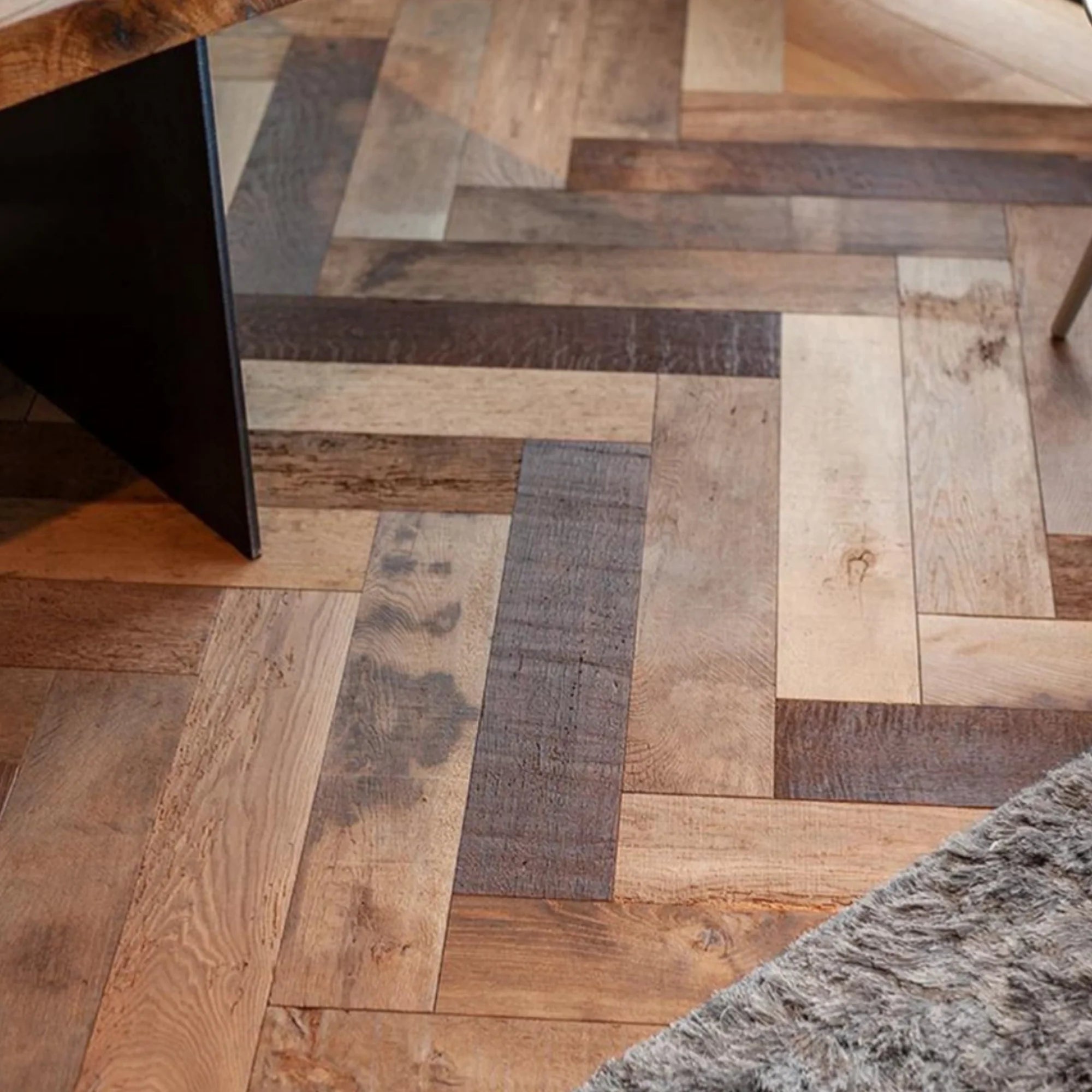
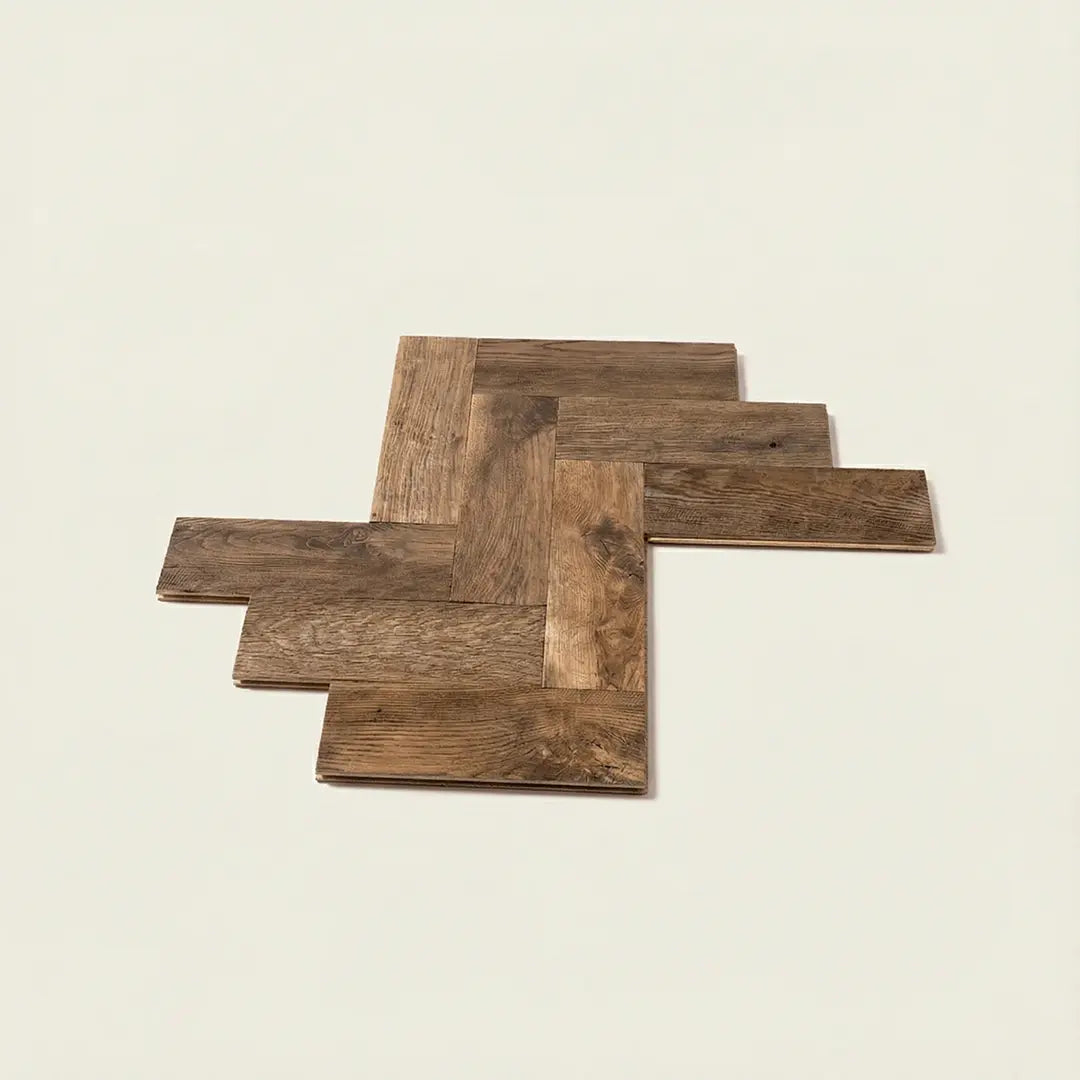
Plank flooring runs boards in parallel lines and suits most room shapes. It reads as calm and linear, which works particularly well in longer rooms or open-plan spaces. Herringbone lays shorter boards at ninety-degree angles to form a chevron pattern. This layout adds visual energy to a room and works especially well in hallways, kitchens and dining areas.
Both patterns are available in reclaimed oak and chestnut from Woody Workz. The choice ultimately comes down to the proportions of your room and the level of visual interest you want. If you are unsure, a smaller herringbone section in a hallway or entrance is a low-risk way to test the look before committing to a larger area.
What to Consider Before Fitting Reclaimed Oak Flooring
Reclaimed boards vary slightly in thickness and width because they were originally cut for structural use, not for uniformity. This is part of their character, but it does require a competent installer. Therefore, always use a fitter who has experience with reclaimed or antique timber rather than someone who only works with engineered planks.
Acclimatisation matters too. Stack your boards loosely in the room where they will be fitted and leave them for at least five to seven days. This allows the timber to adjust to your home's humidity before installation. Skipping this step is the most common cause of gapping or slight cupping after fitting.
Consider the subfloor as well. Reclaimed oak can be fitted over most solid subfloors, including concrete with a suitable DPM. Underfloor heating is compatible in most cases, though you should check the maximum surface temperature with your installer. Our team can advise on specifics when you order.
Sustainability and Certification
Choosing reclaimed oak flooring is, by definition, a low-impact decision. No new trees are felled. The carbon locked into those boards during their original growth stays locked in rather than being released through demolition waste. Additionally, Woody Workz holds FSC and PEFC certification and plants one tree for every order placed. Free UK delivery is included as standard, so there are no hidden costs at checkout.
Each board is dismantled and cleaned by hand, with nails removed and surfaces prepared before dispatch. Our flooring is made to order in our own workshop and dispatched in four to six weeks. A small number of pieces are ready to ship; contact us to check current availability.
You might also find our reclaimed wood wall cladding useful if you want to carry the same oak or chestnut character onto your walls for a cohesive interior scheme.
Frequently Asked Questions
Does Woody Workz Use Pine?
No. Woody Workz works exclusively in reclaimed oak and chestnut. Both are hardwoods. We never use pine or other softwoods in our products.
Where Does the Timber Come From?
All our timber is salvaged from historic buildings across Anatolia and the Balkans and beyond. We do not name specific countries or regions. The provenance is genuine, and the age and character of each board reflects that.
How Long Does an Order Take?
Reclaimed oak flooring from Woody Workz is made to order and dispatched in four to six weeks. Delivery within the UK is free. If you need something sooner, get in touch and we will check whether any ready-to-ship stock is available.
Can I Order a Bespoke Size or Layout?
Yes. We work to specific dimensions and can discuss layout options for unusual room shapes or mixed-species floors. Simply request a bespoke quote and we will come back to you with options and pricing.